Visit to Georges Clémenceau's house and gardens
Adult €9.00 Child (6 to 11 years old) €0.00 Teenagers (12 to 17 years old) €0.00 Student (proof required) €0.00 Job seeker (proof required) €0.00
Free with the Pass!
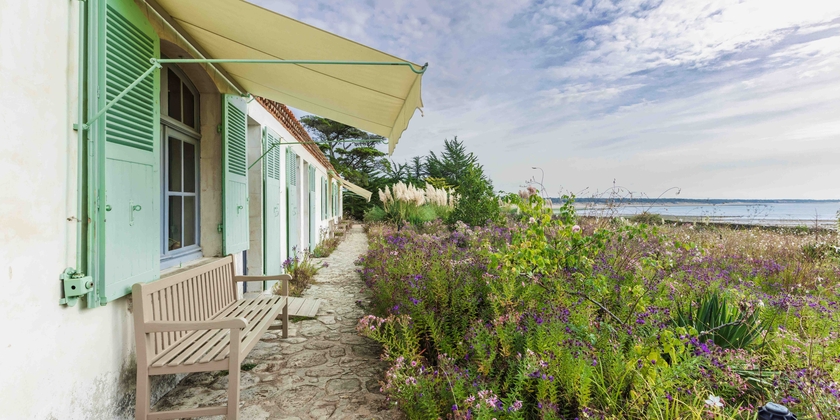
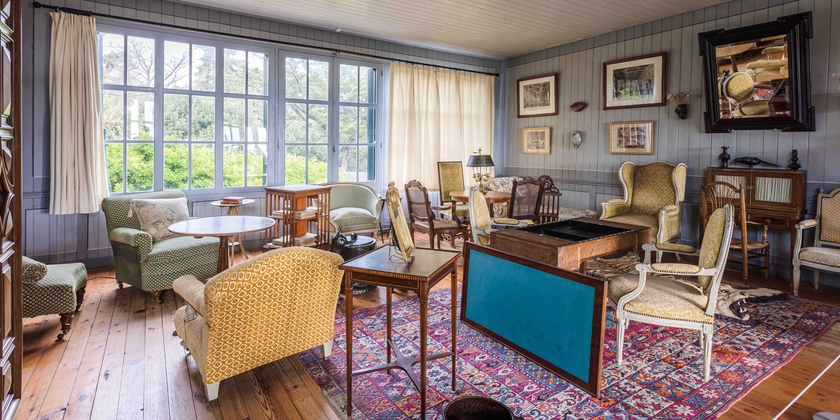
Wander freely through Georges Clemenceau's house and gardens, where he stayed for the last ten years of his life.
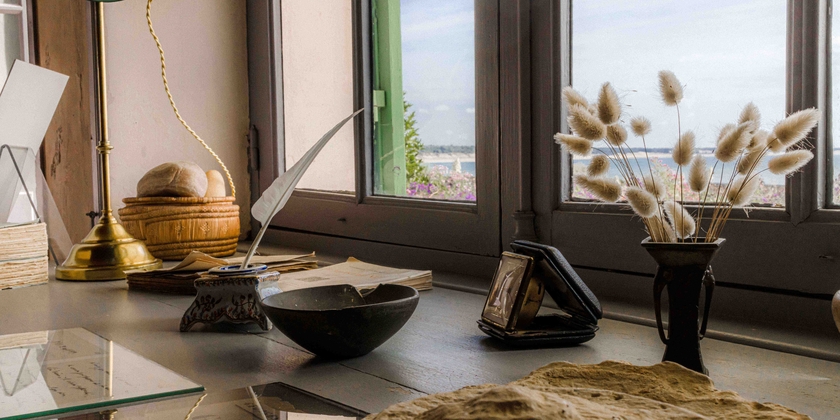
Filled with memorabilia, including Georges Clemenceau's travels and a collection of Asian art, this house nestling on a dune facing the ocean remains exactly as it was when the ‘Tiger’ died in 1929. It borders an atypical, wild garden, an Impressionist-inspired flower garden imagined by George Clémenceau in collaboration with his great friend, the painter Claude Monet, and whose plantings were restored in 2006 thanks to their correspondence.
The site hosts exhibitions all year round, and admission to current exhibitions is included in your ticket to the monuments.
Additional information
Conditions of visit:
. Bags and large hiking bags are prohibited. Small bags (less than cabin size) are allowed.
. scooters are forbidden.
. Smoking and eating in the monument is forbidden.
. The monument is not accessible to minors unaccompanied by a major official.
Georges Clemenceau (1841-1929) first made a name for himself as a journalist, publishing Zola's famous ‘J'accuse’ in his daily L'Aurore. Leader of the Radical Party, Senator and then President of the Council from 1906 to 1909, he was recalled to power in 1917. The ‘Father of Victory’ rented this house in his native region from 1919 onwards, before retiring from political life.
It was here, facing the ocean, that this academician reflected on the events of his remarkable destiny and wrote several books. After his death in 1929, the furnishings of the house were slightly modified by Georges Clemenceau's three children, and adapted to make it a place of remembrance by adding memorabilia, objects and photographs to the rooms.
As soon as he moved in, in August 1920, George Clémenceau began to create a garden on the dune, consisting of a flower terrace in front of the house with a view of the ocean, a bed of golden charcoal and another of roses at the back of the house.
Owned by the State since 1931, the site has been listed as a historic monument since 1970.
Opening hours
From 15 May to 15 September: 10:00 - 12:30 and 14:00 - 18:30
From 16 September to 14 May: 10:00 - 12:30 and 14:00 - 17:30. Closed on Monday.
Warning: Last access to the monument 45 minutes before closing.
Closure 1and January, 1and May, 1and November and 25 December
The monument is closed every Monday.
Accessibility
-
Guide dogs
Guide or assistance dogs are welcome.
-
Motor disability
The house can accommodate one wheelchair per room.
On request, the site offers folding chairs.
The toilets are suitable for people with disabilities.
Benches are arranged in the gardens.Parking:
- Free municipal parking is available about 60 metres from the reception building.
- Two parking spaces 60 metres from the building are reserved for persons with motor disabilities.
- A drop-off is located near public sanitary facilities, about 70 metres from the reception building.
-
Visual impairment
A Braille booklet for visually impaired people is available at the monument's reception. This booklet presents the plan of the house and the gardens and various objects of the house thanks to photos worked with a high level of contrast.
Access conditions
-
Access by car
Free parking close to the monument is available (with PMR seats).
BENEFITS INCLUDED in your La Rochelle Ocean Pass (adult rate only): get a 10€ discount on renting a Yelomobile car.
Join the sites included in your pass around La Rochelle, with the yellow-roofed Yelomobile car sharing: by reservation, for 1h or several days the Yelomobile cars facilitate your travel near La Rochelle.Details of rates and conditions of access to the service Yelomobile